Julia Hugg
I didn't set out to become an AI consultant.

I set out to build a travel business

I've spent more than 12 years in technology and product marketing, much of that time working with companies in travel and hospitality. In 2024, I found myself at a bit of a crossroads. I was laid off from my role at seven months pregnant, and instead of going back into another product marketing leadership position, I decided to build something of my own.

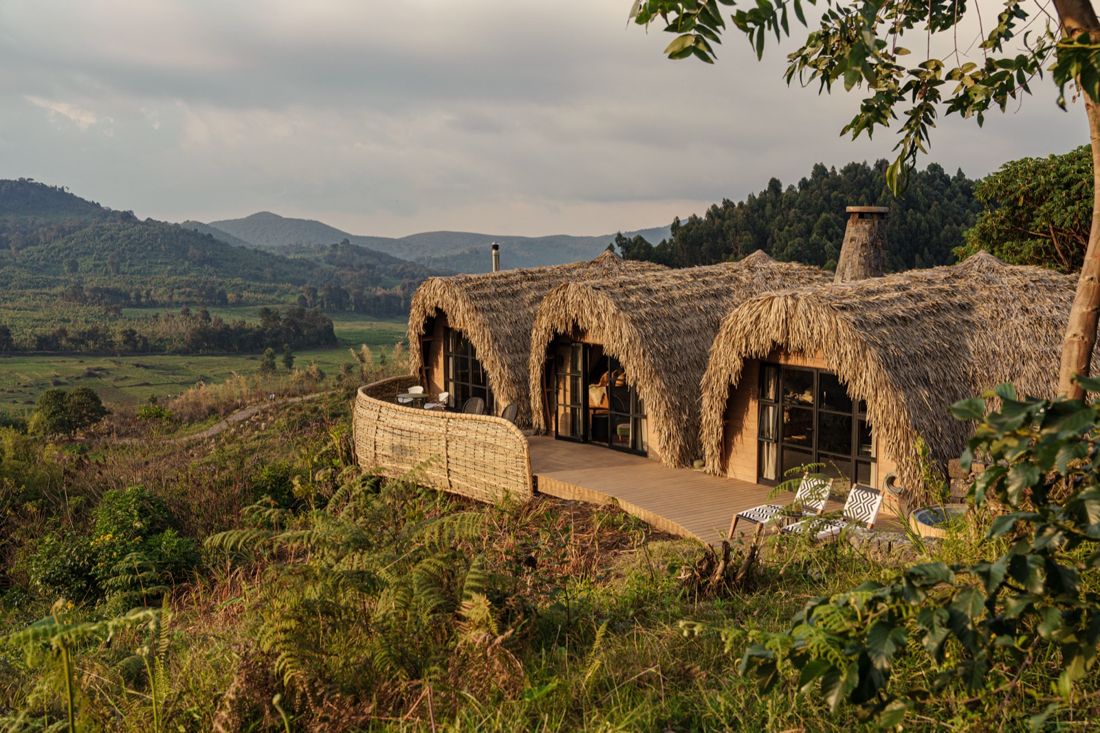
Vineyards above Lake Geneva in Lavaux Bisate Lodge in Rwanda Asaba ryokan in Shuzenji, Japan, at night

I'd always loved travel, both the experience of going somewhere and the people, places, and cultures that make it meaningful. I wanted to build a business around that, with the chance to create something I believed in and more control over how work fit into my life.

So I started Hugg Travel Co., a luxury travel advisory, in 2024, and as it turns out, I started it at a pretty interesting time.

Building a travel business at the start of the AI boom

From small experiments to a different way of running the business

When I started Hugg Travel Co., ChatGPT and the wave of new AI tools were becoming much more accessible, and with my background in technology, I was naturally curious. I started experimenting, at first to solve small problems and make certain parts of the business easier.

The more I experimented, the more I started thinking about the business differently. Rather than asking how AI could help me finish individual tasks, I mapped the entire client journey, from the first inquiry to the moment someone gets home from a trip, and looked at two things.

first

A better client experience

I wanted working with me to feel thoughtful, personal, and special, with the kind of details and service that make an advisor different from booking a trip yourself.

second

Less work from scratch

Hours were going to organizing information, drafting emails, following up, and preparing documents. A lot of that work mattered, but not all of it needed to start from a blank page every time.

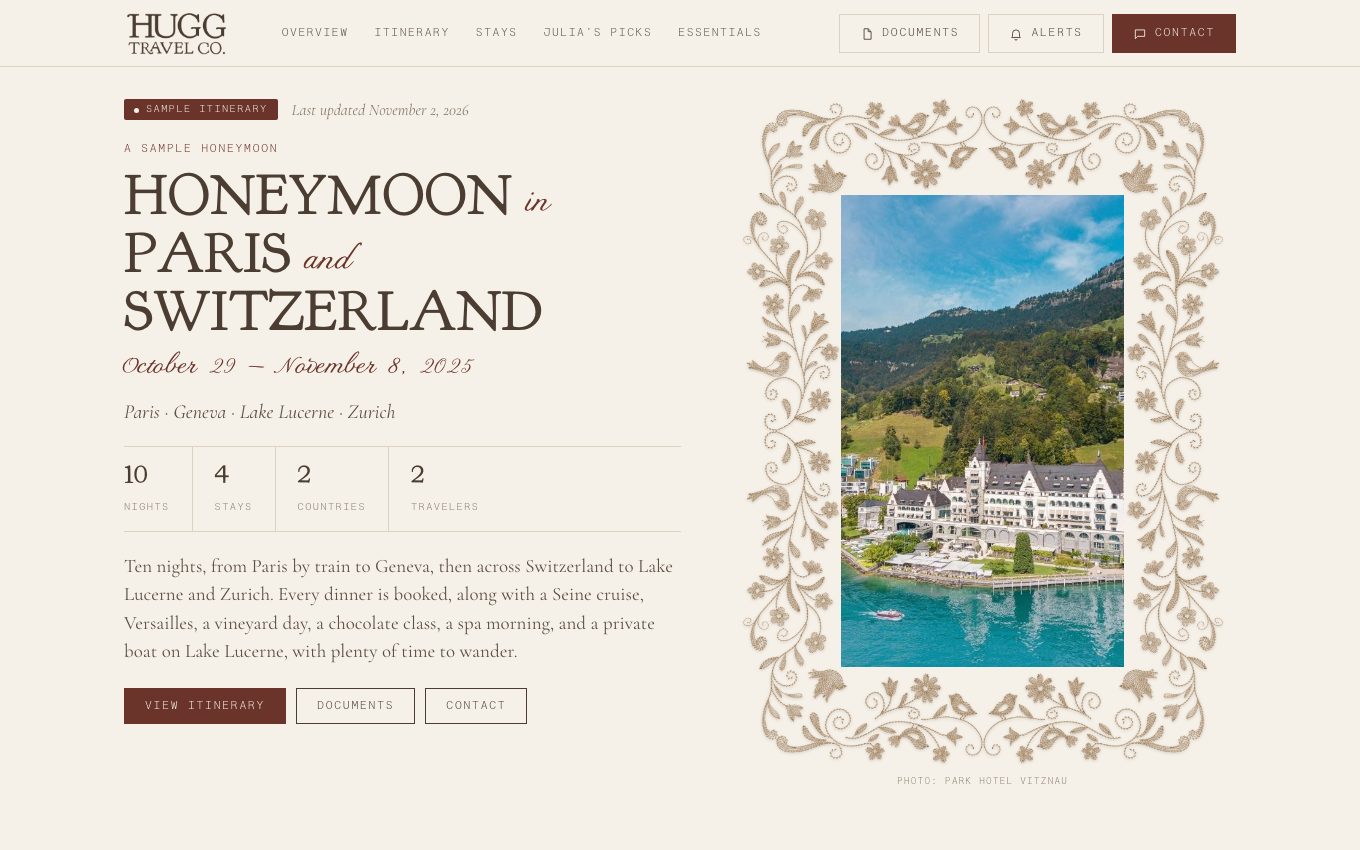
a sample trip page
A sample honeymoon trip page for Paris and Switzerland
A sample trip page on a phone
The business became my testing ground

A few experiments turned into a system

I've built workflows to help manage new inquiries, prepare client communications, organize client and supplier information, develop proposals, create itineraries, and keep track of the day-to-day business. Some are fairly simple, and others involve several tools, connected data, and a fair amount of tinkering to get right.

75-80%of the manual back-end and admin work I used to do myself is now handled by AI. That's my own estimate, and not a result I'd promise every advisor, but it has changed how I spend my time and how I run the business.
What I believe

The human side of travel matters even more

I don't think AI is coming for travel advisors' jobs, but I do think it will change how we do them, and the advisors who learn to use it well will have an advantage. I also don't think the answer is to automate everything.

My clients work with me for my judgment, relationships, recommendations, and experience, and for the support that comes with having someone in their corner. Those are the parts of the business I want to spend more time on.

"There's a difference between using AI to finish a task and building a business where you're no longer starting that task from scratch."That's the distinction I want to help other advisors understand

What I'm doing now

Still building, and helping others do the same

I still run Hugg Travel Co. and keep building, testing, and refining the systems I use every day. Alongside that, I help travel advisors and travel organizations figure out where AI fits into their businesses and how to put it to work.

Sometimes that means getting more out of the tools someone already uses, sometimes it means mapping a process and building a workflow together, and sometimes it means helping a team understand what's possible before they invest in new technology. Either way, I want to share what I've learned and help people skip some of the trial and error, without a pile of prompts they'll forget or a setup that's more complicated than it needs to be.

Almost everything I know, I taught myself by experimenting, researching, and talking to other people about what they're doing. I'm still figuring things out too, and I think that's part of what makes this such an interesting time. The most important thing is to start, and to have the confidence that you're smart enough to figure it out.

Fora also wrote about how I run my business: read the case study
let's talk

Want to work through what this could look like in your business?

Tell me a little about how you work today, and we'll find the right place to start.

Explore ways to work together